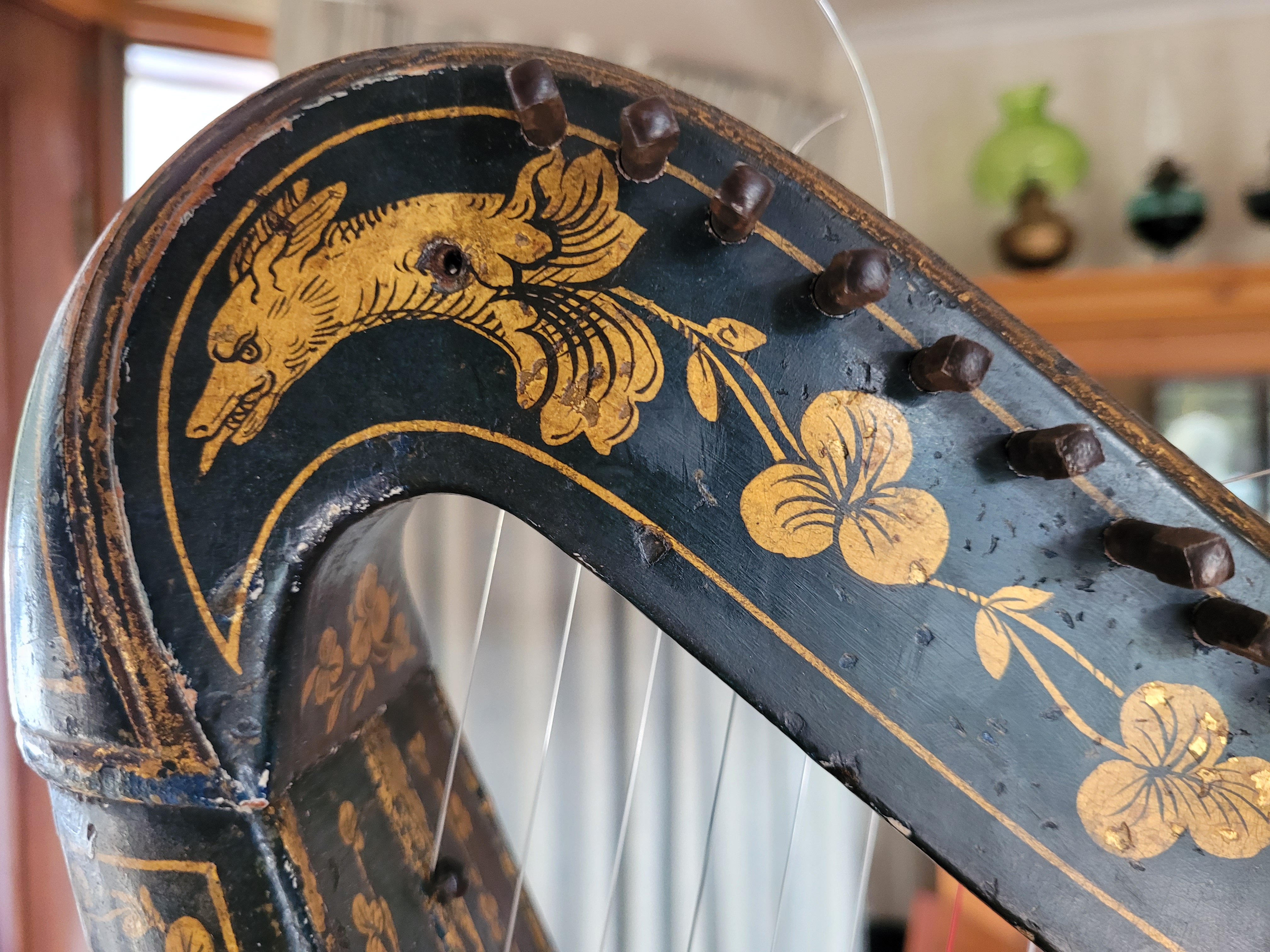
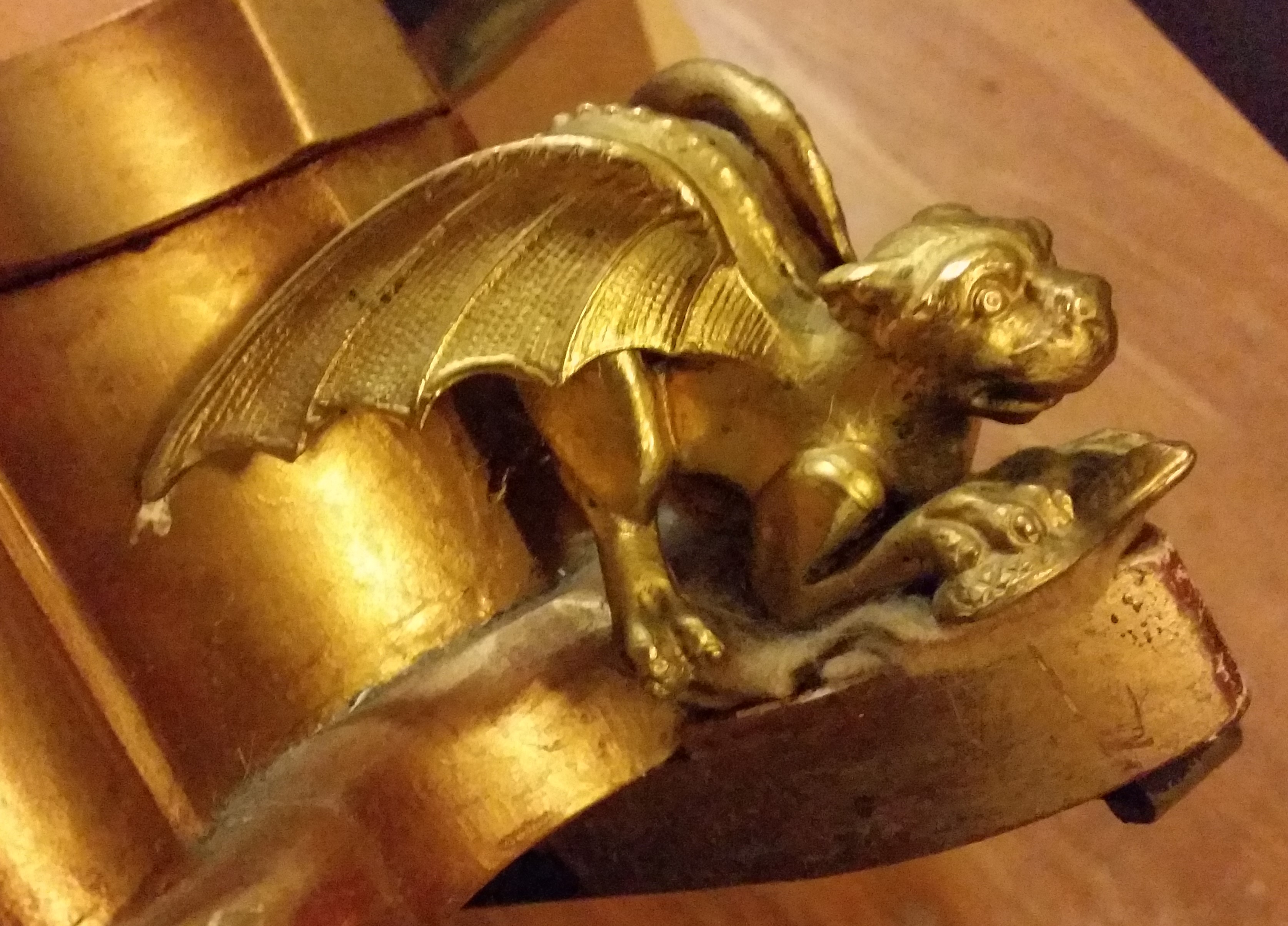
Generally, harps are categorised according to their size and mechanism, if any, of pitch alteration. They are made largely of wood but also include a variety of metal parts and sometimes pieces of ivory or shell decoration. In Australia, the majority of harps imported in the nineteenth century were pedal harps, however, simpler instruments were also present including harps with no mechanism at all. Considerable information about historical instruments can be gained from these components, which are often distinct to a particular maker or type of harp. The following page includes examples of harp parts from different instruments and makers.
Bridge Pins and Tuning Pins
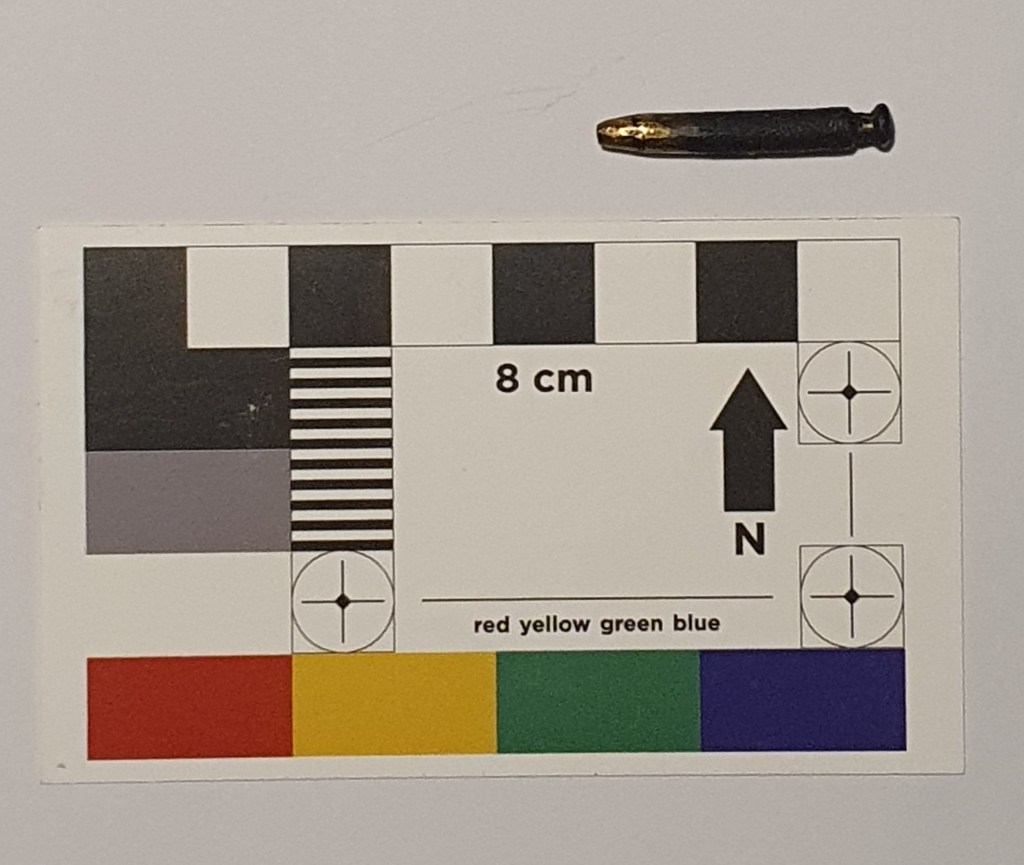
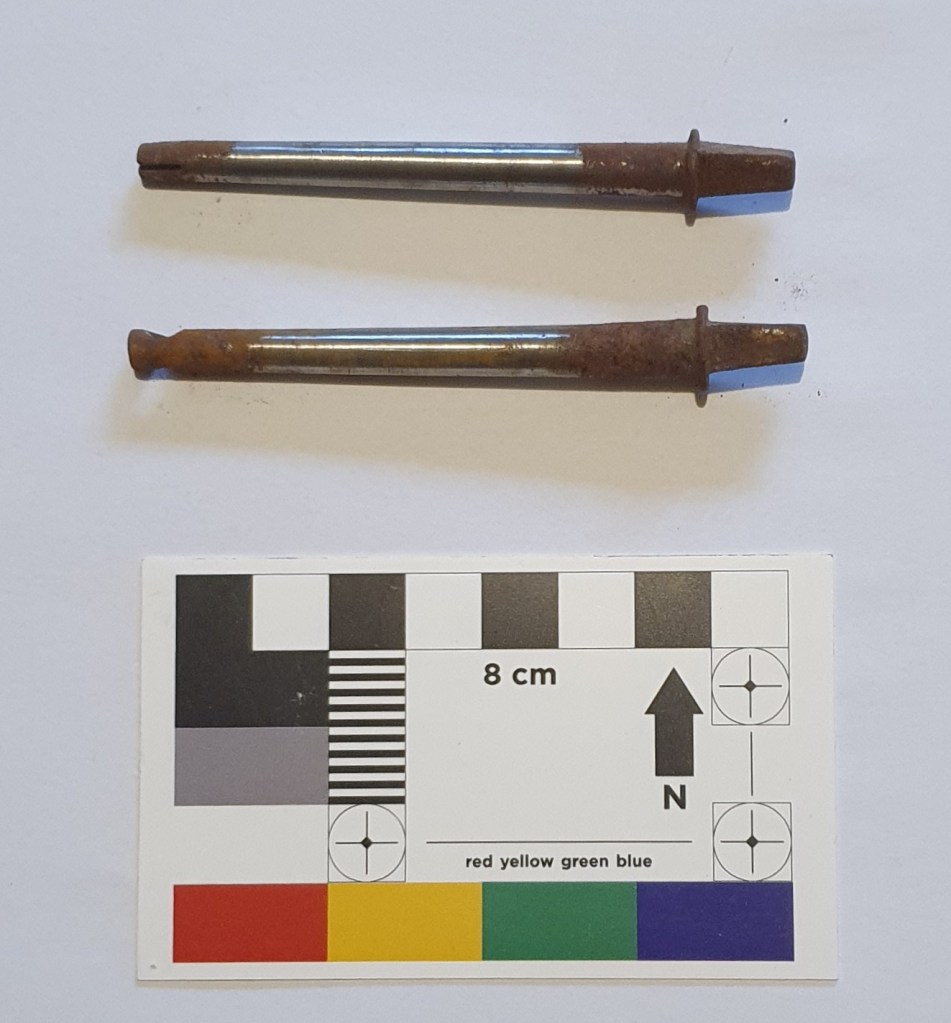
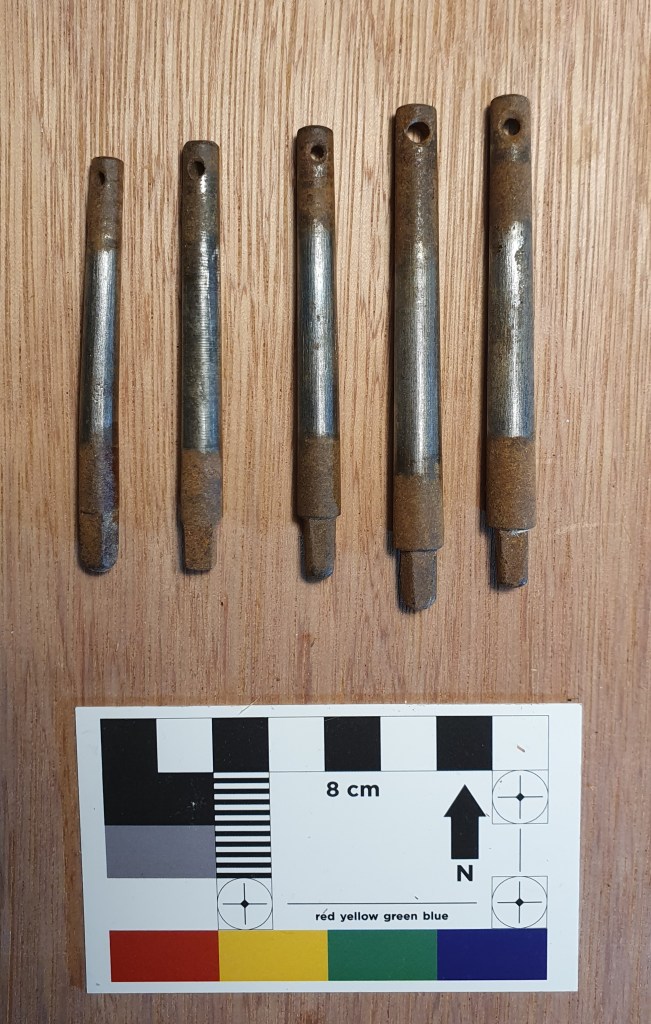
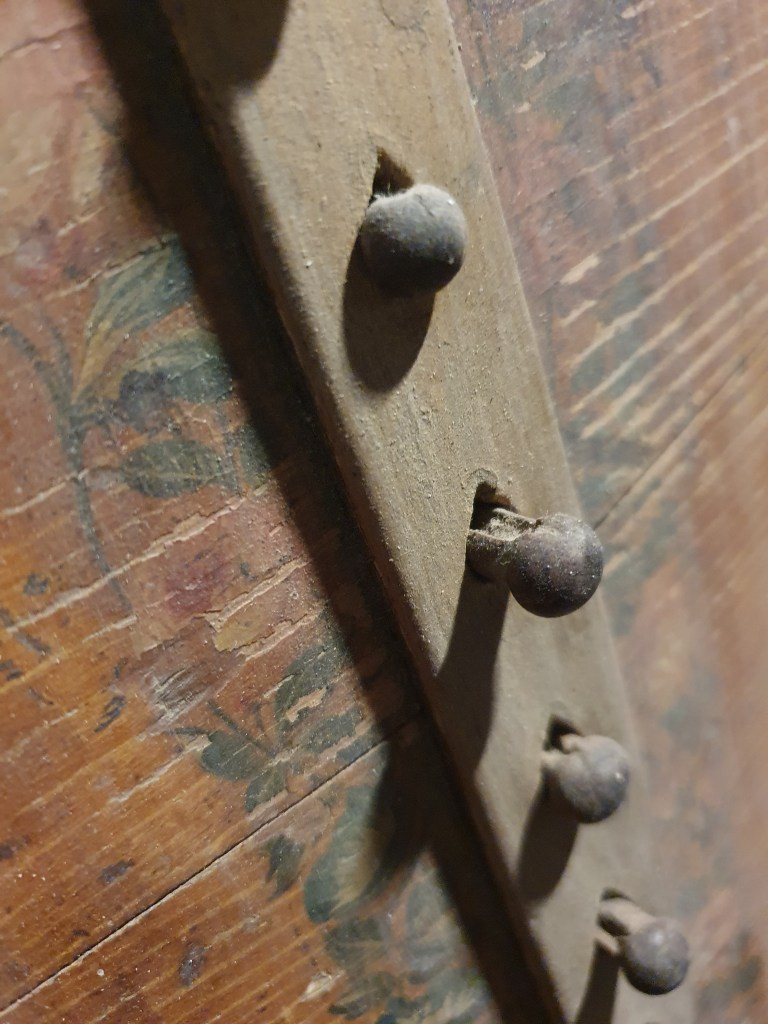
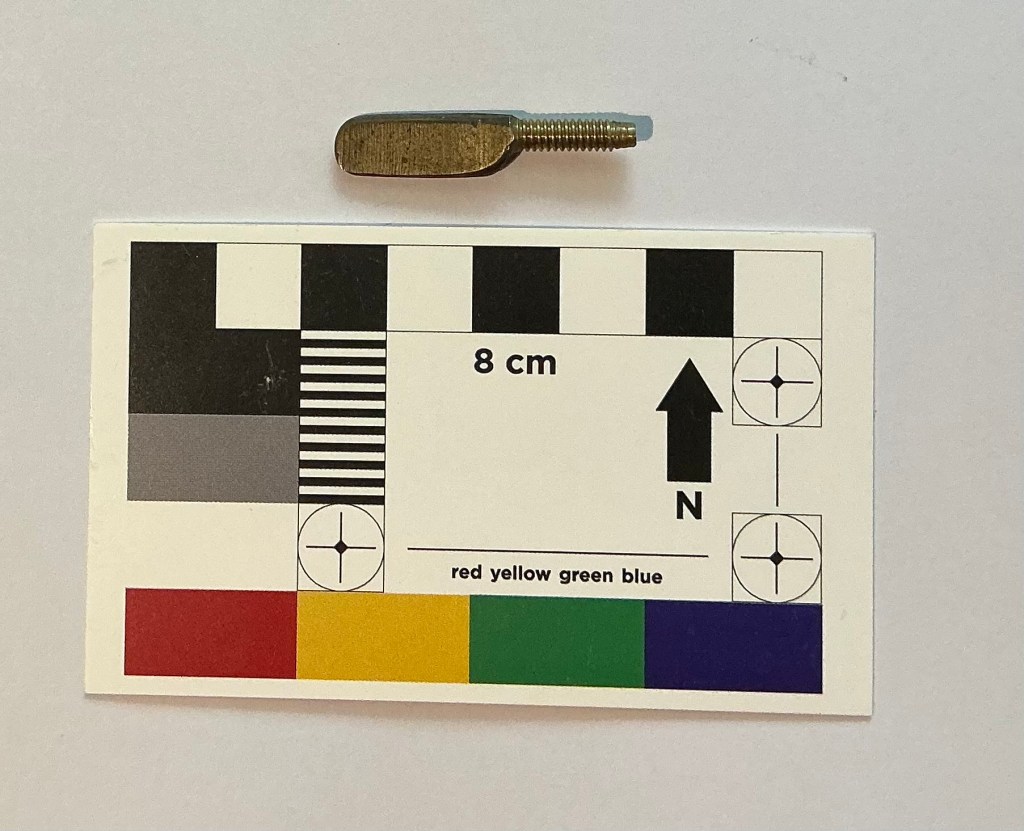
bridge pin (John Egan Portable Irish harp c.1814-1816)tuning pins (Stumpff pedal harp)tuning pins of various sizes (Erard Gothic pedal harp from Paris)
String Pegs
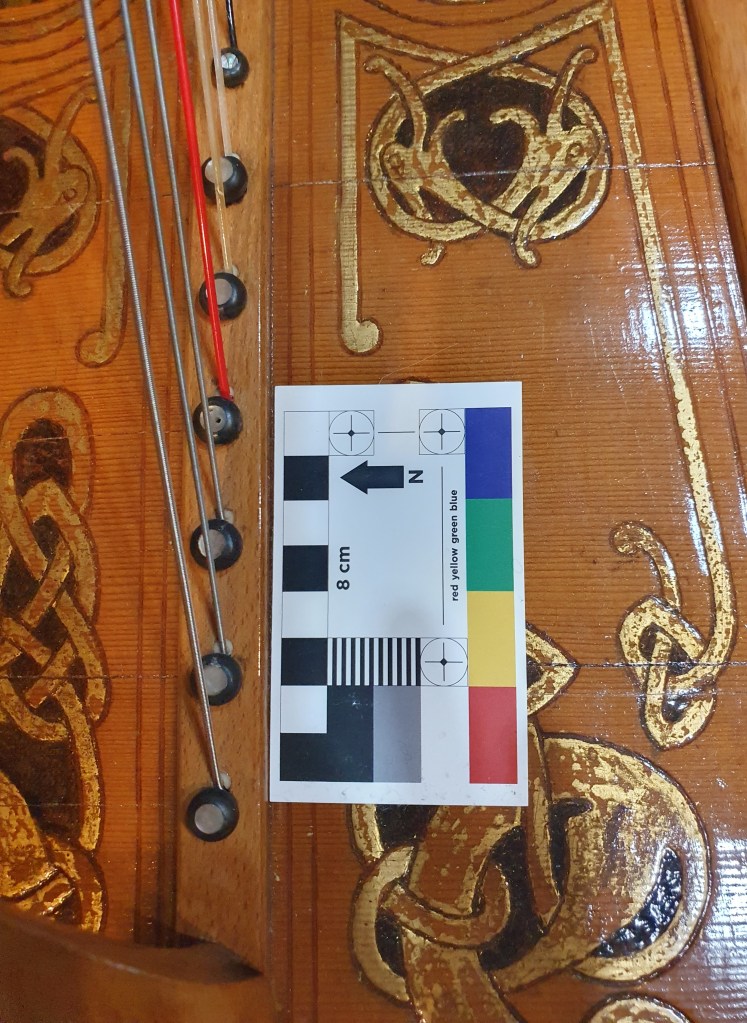
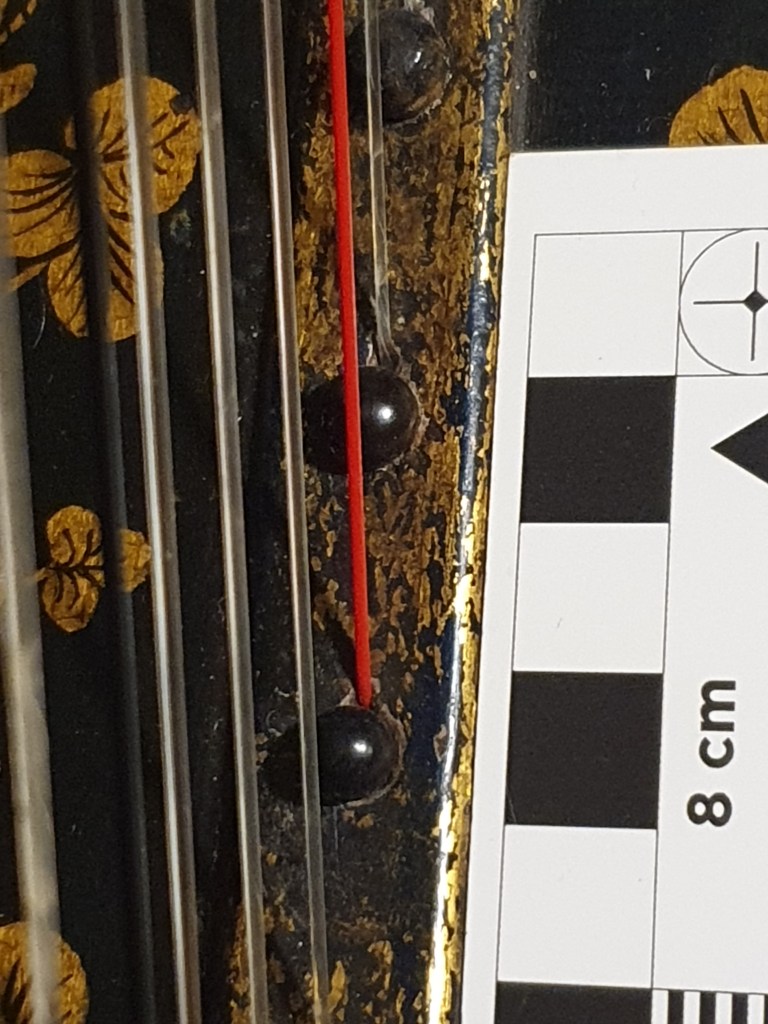
string pegs (Stumpff pedal harp)string pegs with mother of pearl centers (James McFall harp c.1903) string pegs (John Egan Portable Irish harp c.1814-1816).
Pitch Altering Mechanisms
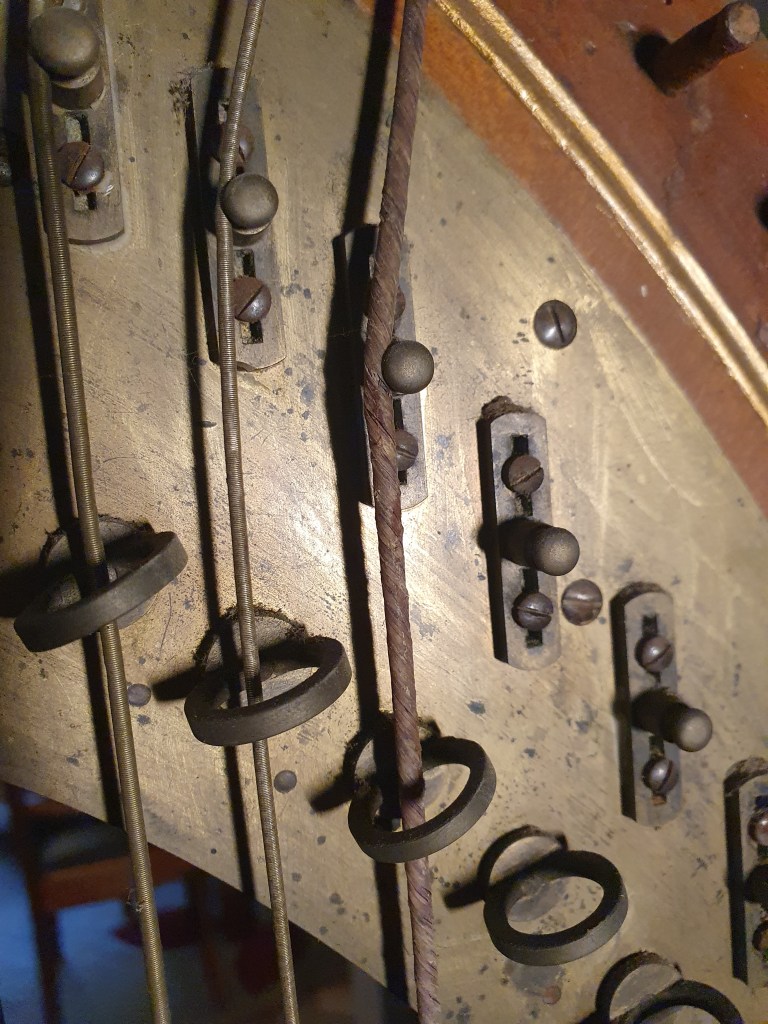
ringstops, thumb stops and blades
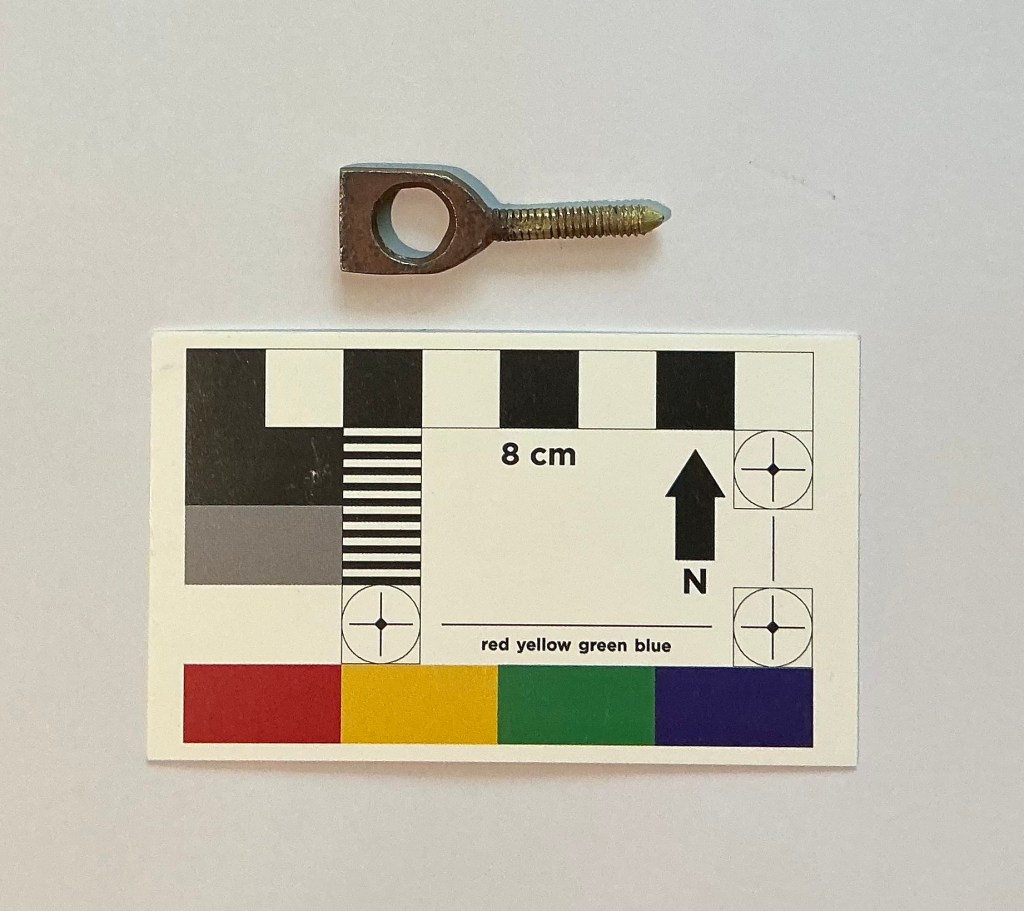
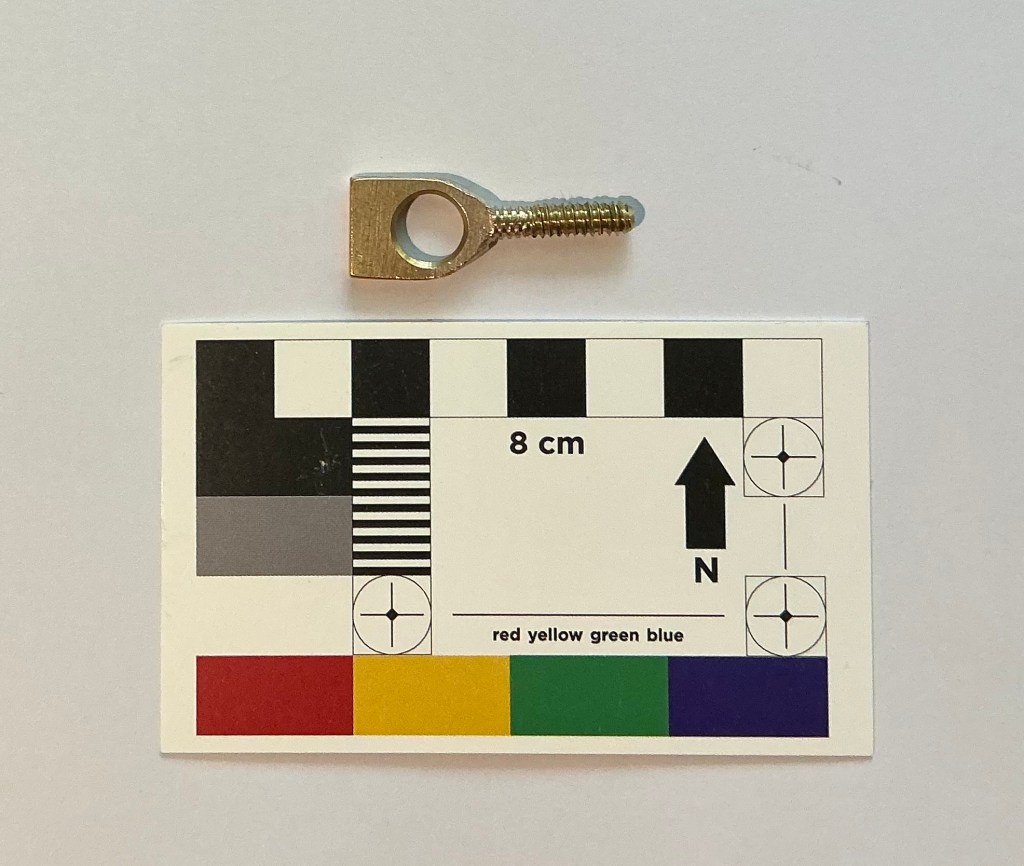
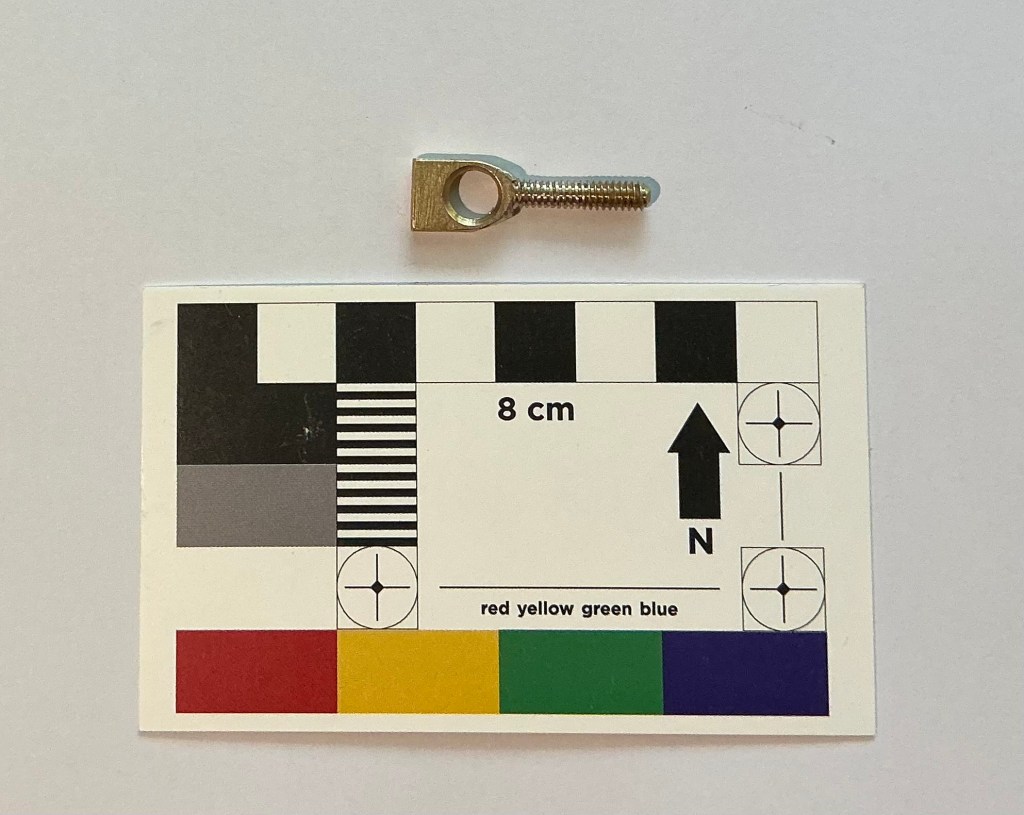
Original large ring stop (John Egan Portable Irish Harp 1814-1816)Medium replica ring stop (John Egan Portable Irish Harp 1814-1816)Small replica ring stop (John Egan Portable Irish Harp 1814-1816)
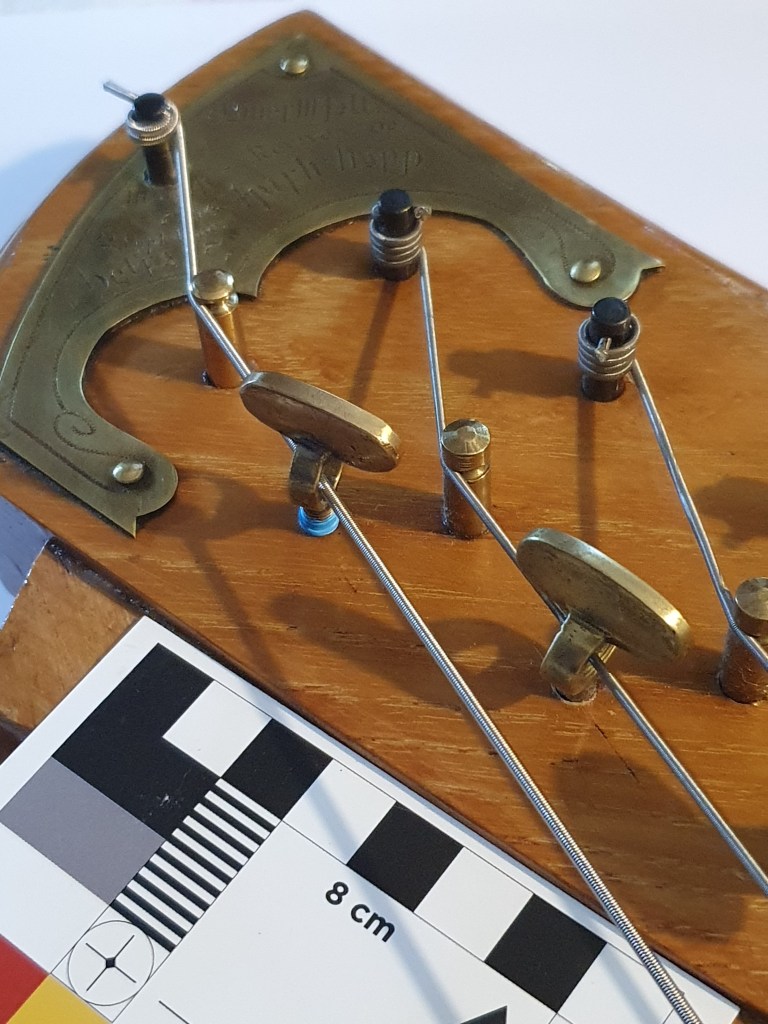
Original thumb stops (James McFall bardic harp c. 1903)Mid-20th century blade
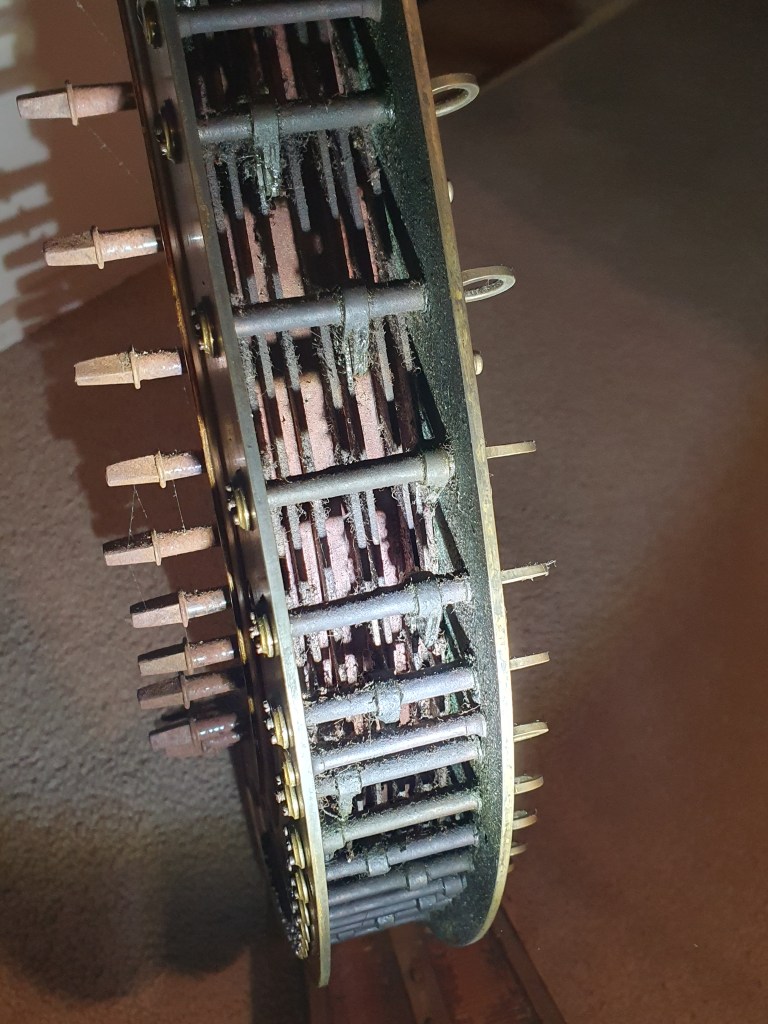
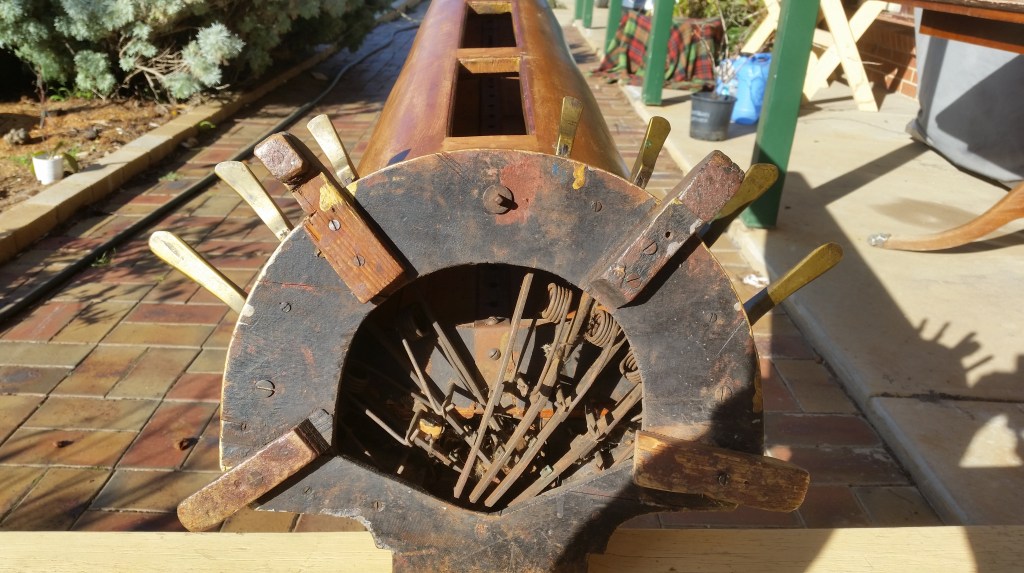
pedal mechanisms
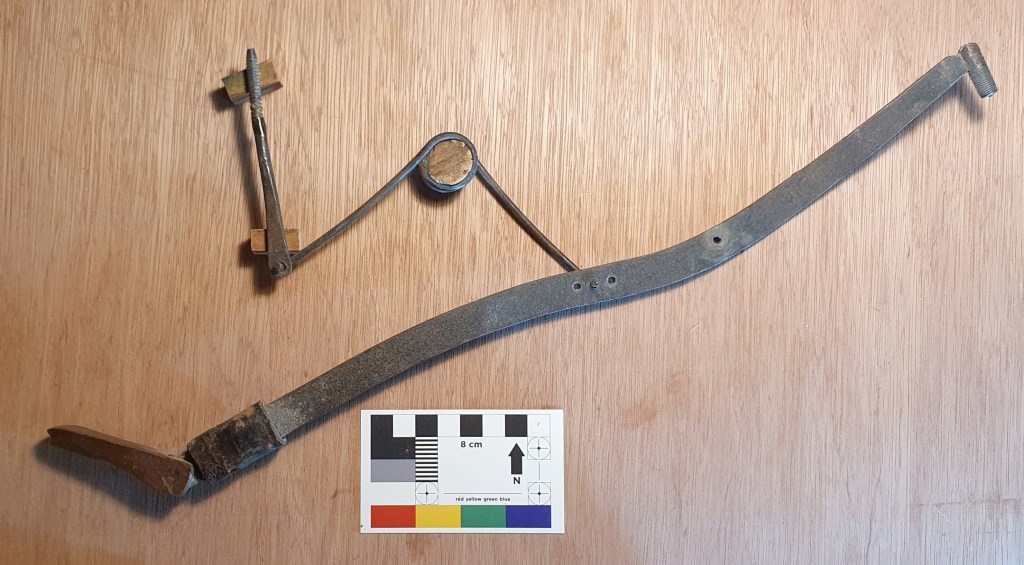
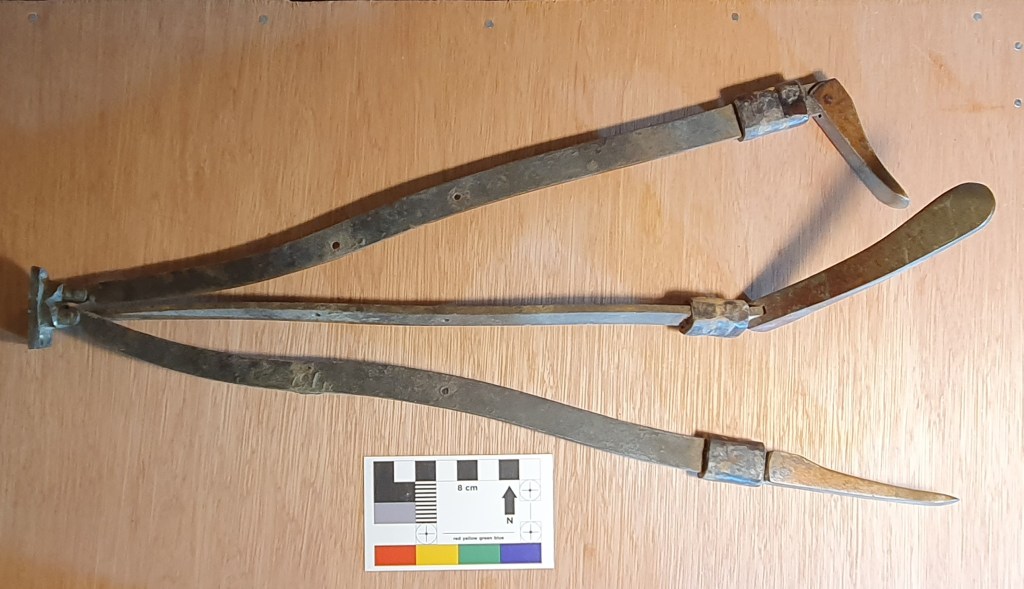
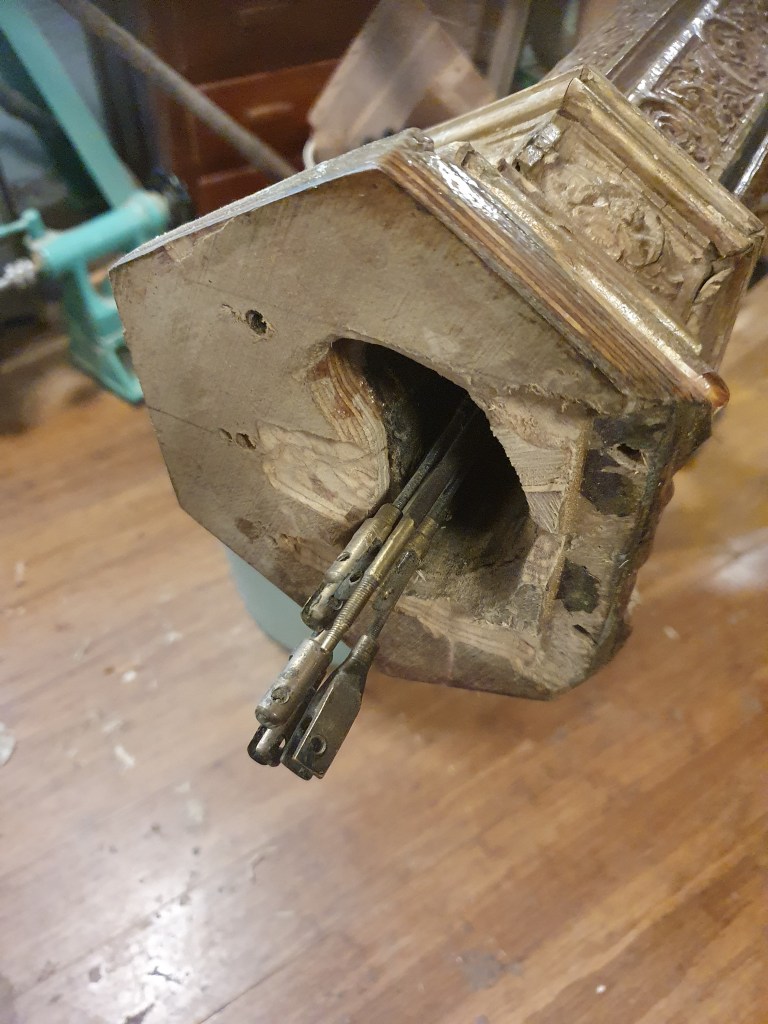
pedal, pedal arm, spring and pedal box fastener for attachment to the pedal harp box (Erard Gothic harp made in Paris)pedal cluster (Erard Gothic harp made in Paris)pedal rods emerging from the base of the column (Gothic Erard made in Paris)
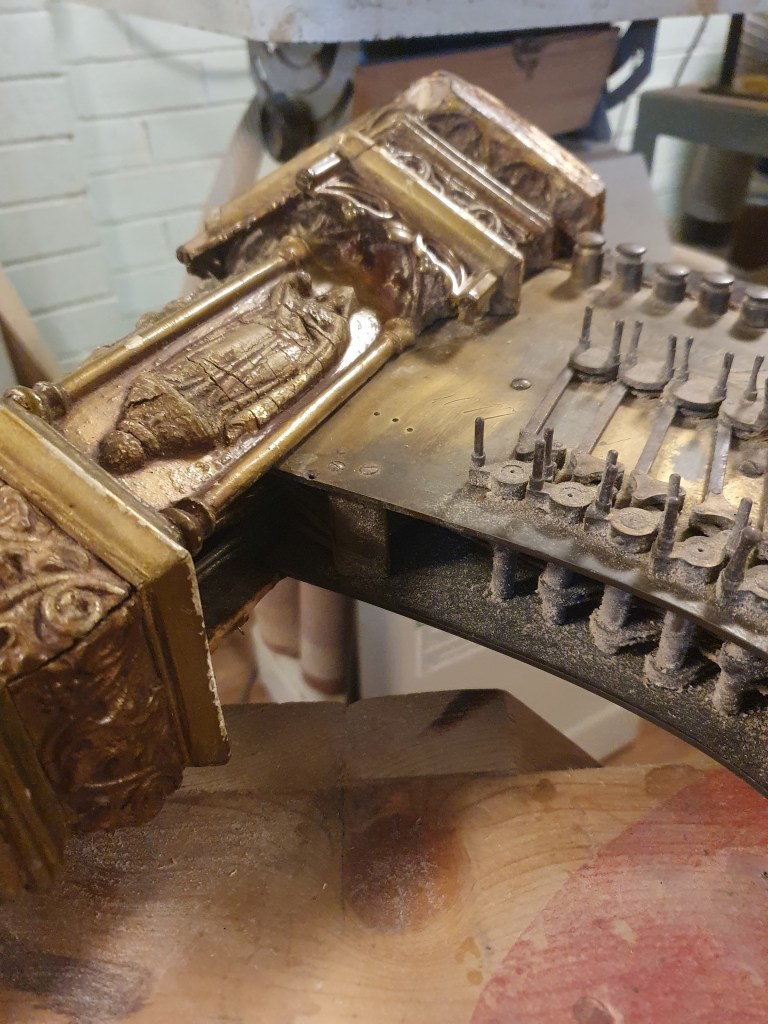
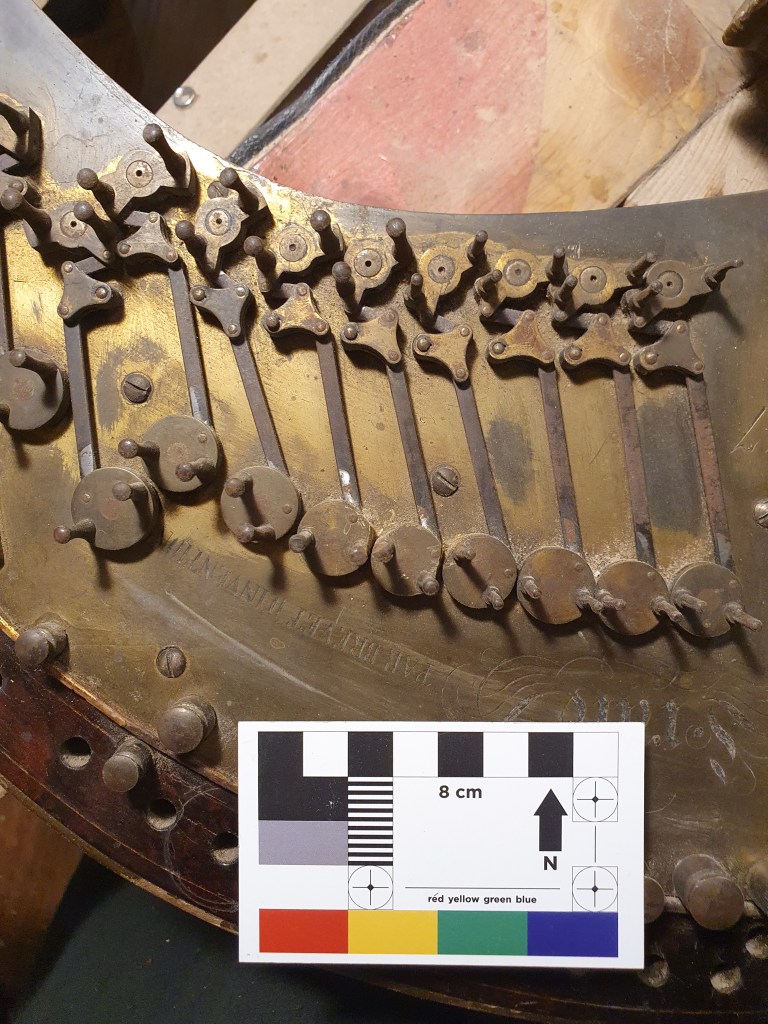
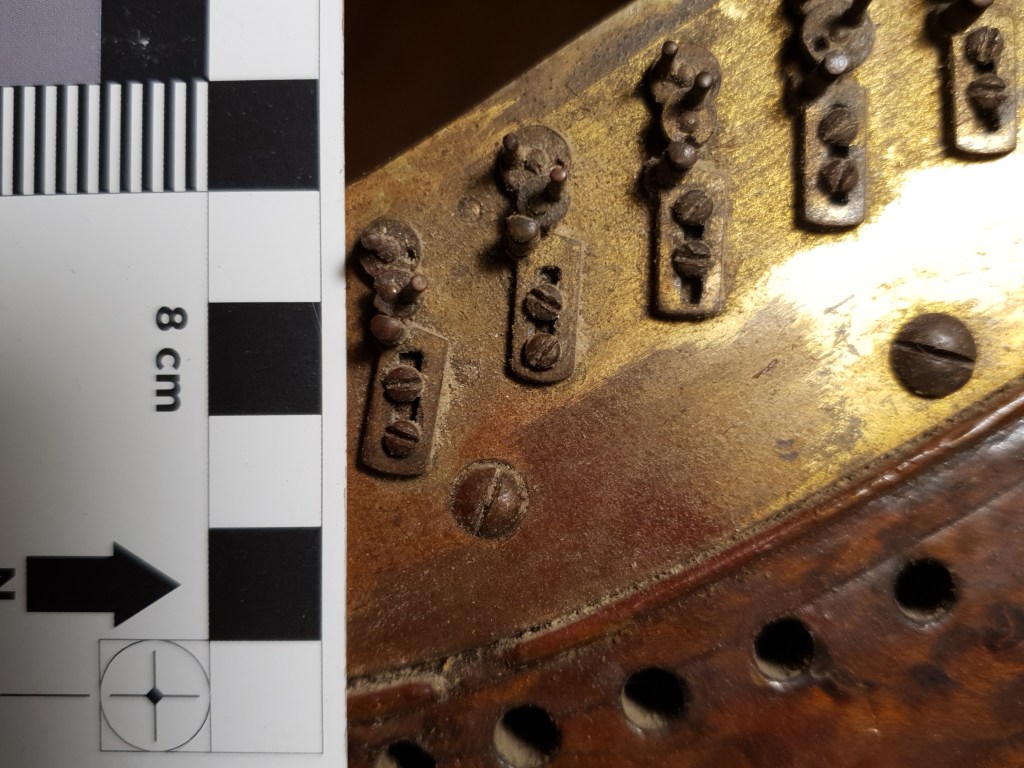
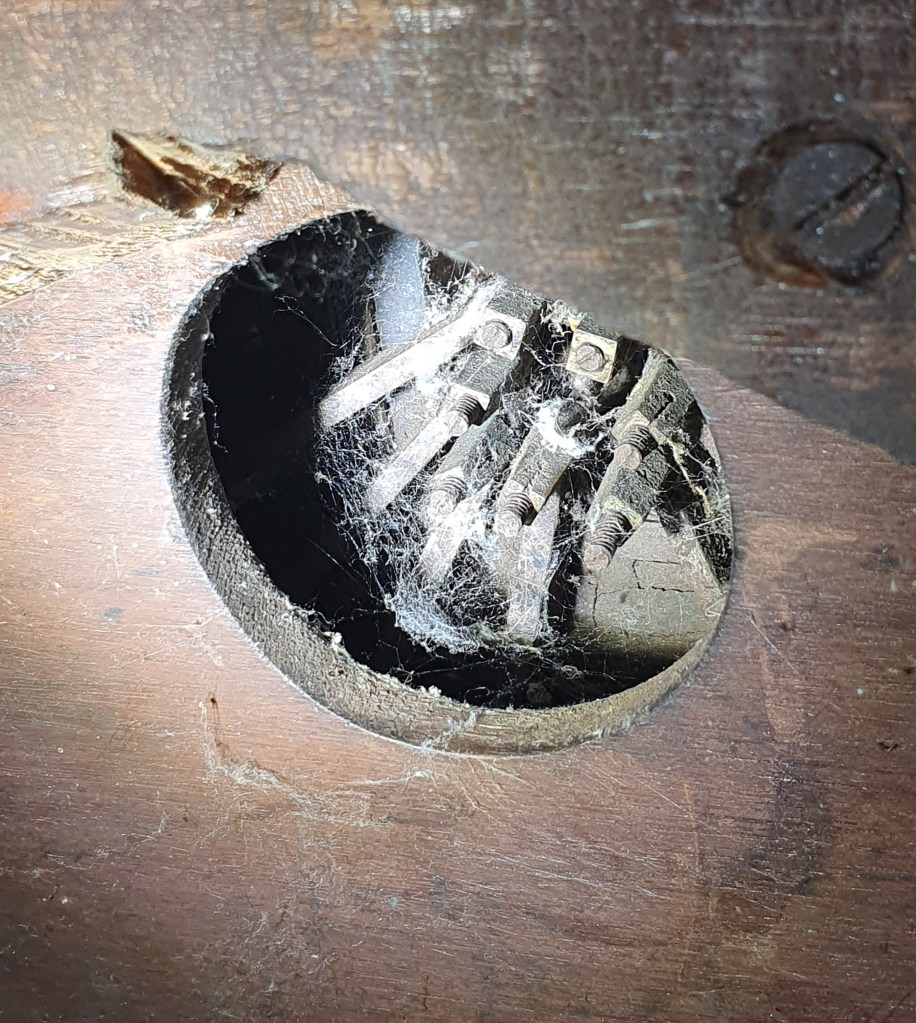
top of the front pillar where the pedal rods connect to the mechanism hidden within the neck plates (Gothic Erard from Paris)fourchettes at the lower end of the harp that alter the pitch of the bass strings (Gothic Erard from Paris)very small fourchettes at the treble end of the neck (Gothic Erard from Paris)
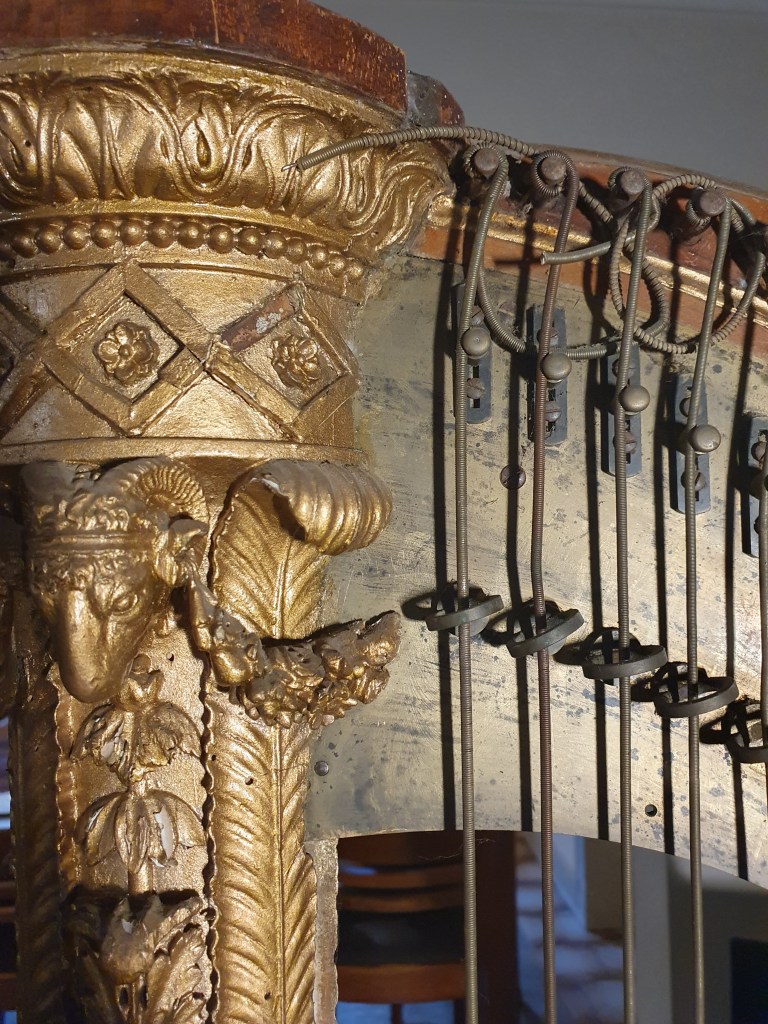
top of the pillar where it connects to the neck with a ring mechanism (Stumpff pedal harp)ring mechanism used before Erard’s fourchettes were widely adopted (Stumpff pedal harp)view of the mechanism beneath the neck (Stumpff pedal harp)
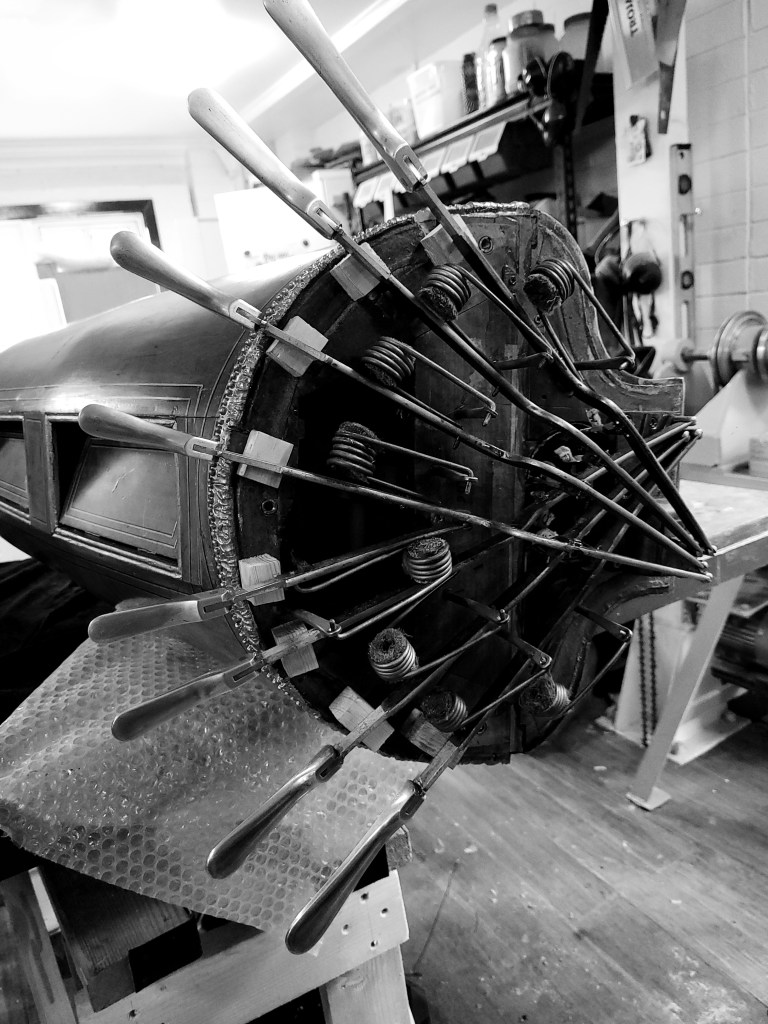
view underneath a pedal harp with the pedal box on pedal rods clustered inside the front pillarview underneath a pedal harp without the pedal box attached this harp has an eighth pedal to operate the doors within the sound box
Harp Accessories
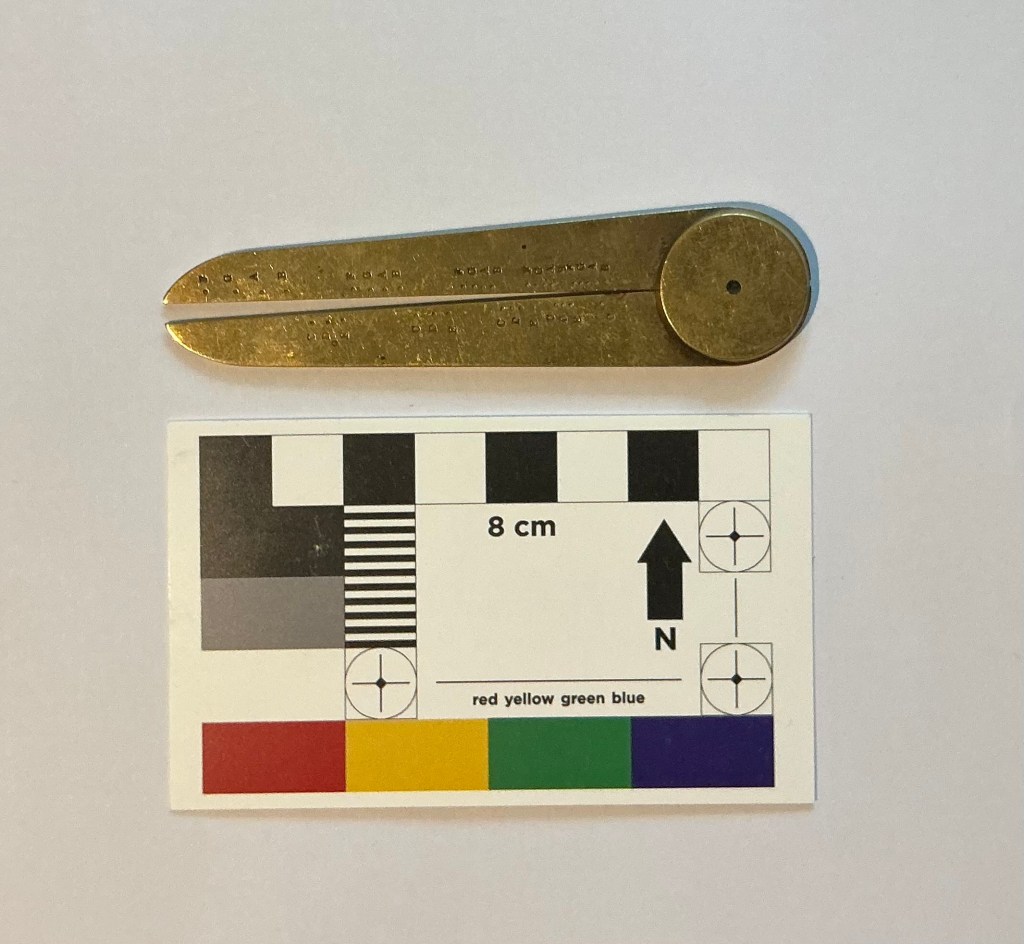
Original brass harp string gauge, stamped with the letter name of the strings, from Erard, London.
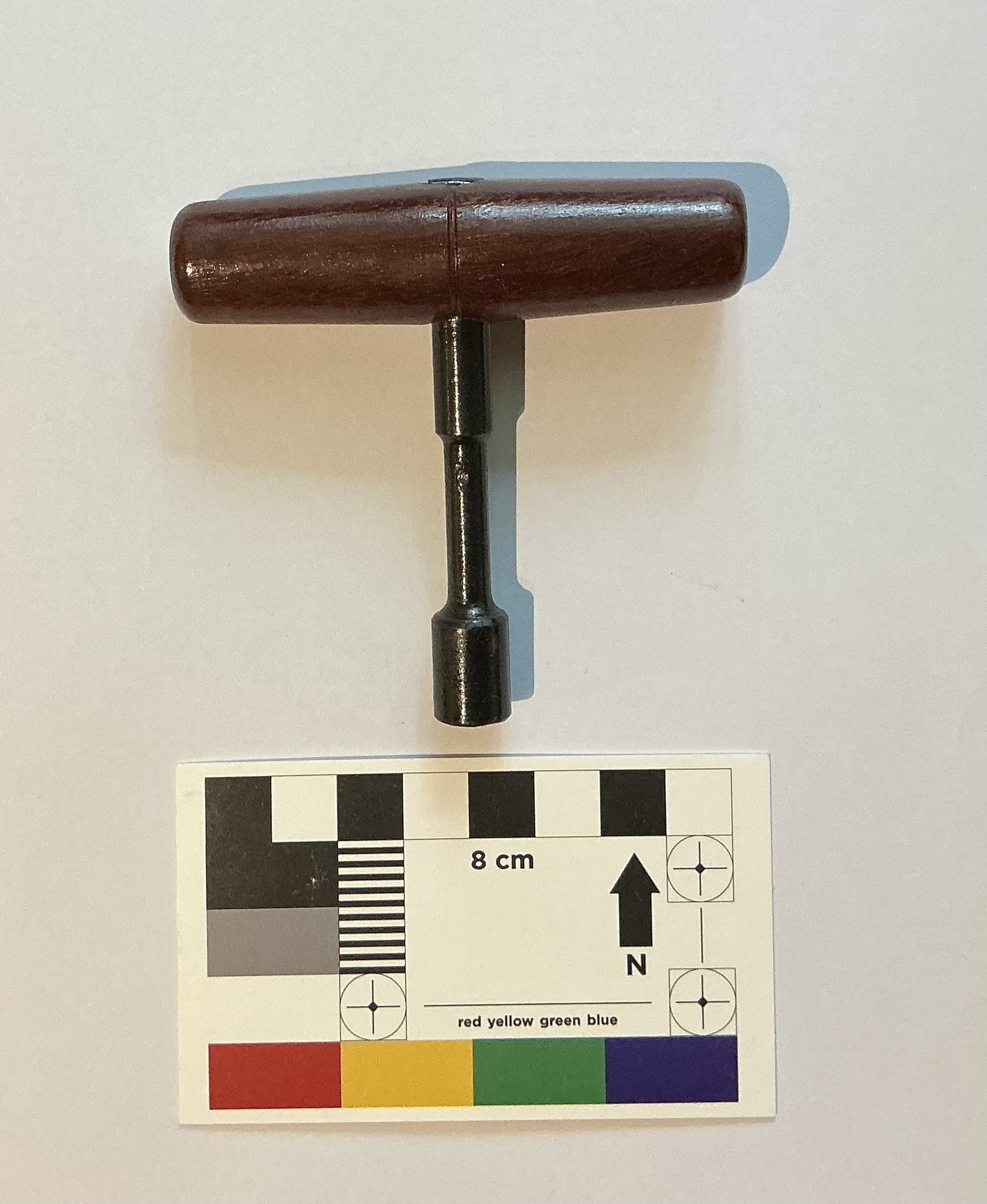
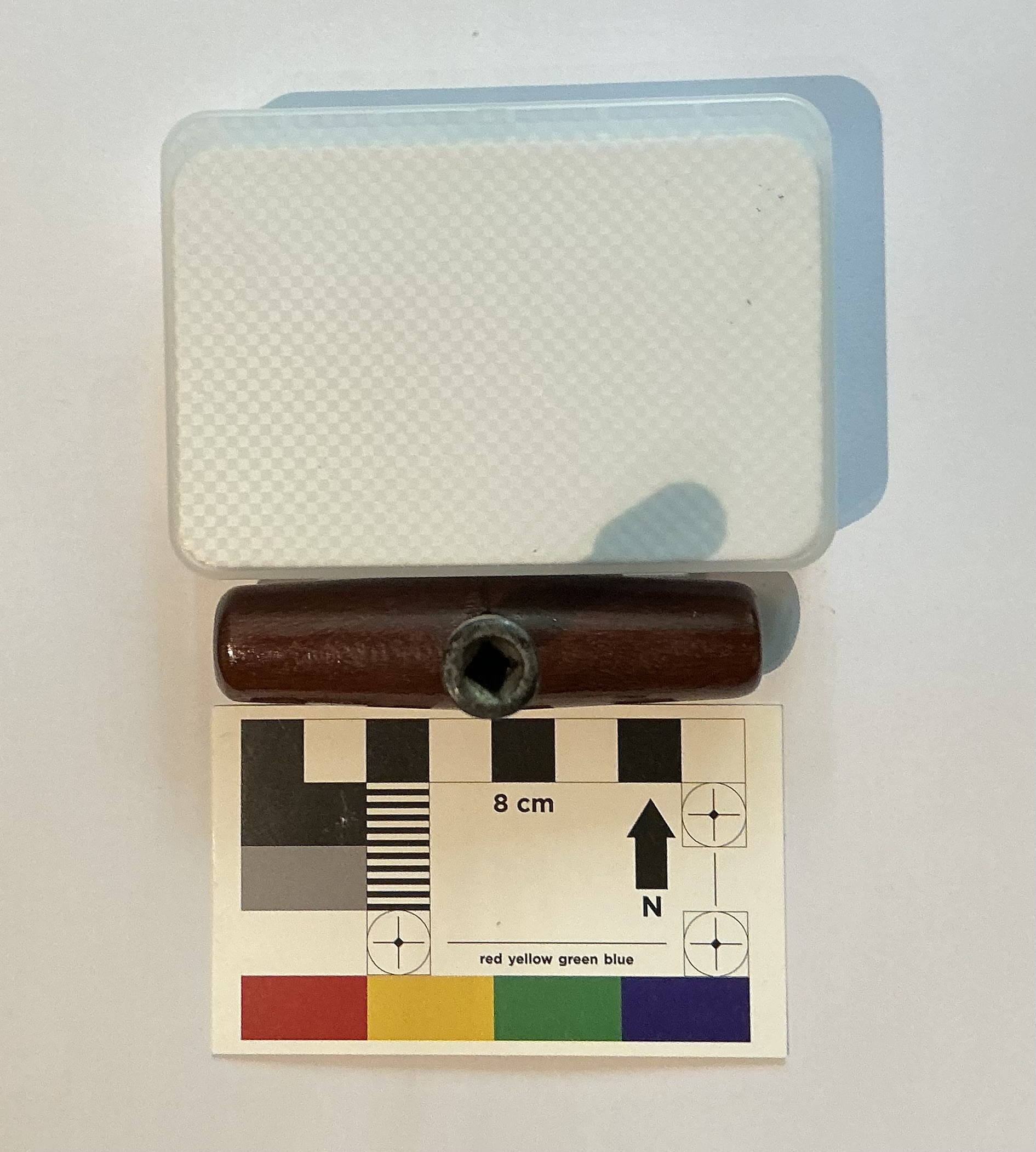
Replica tuning key for John Egan, Portable Harp, Ireland