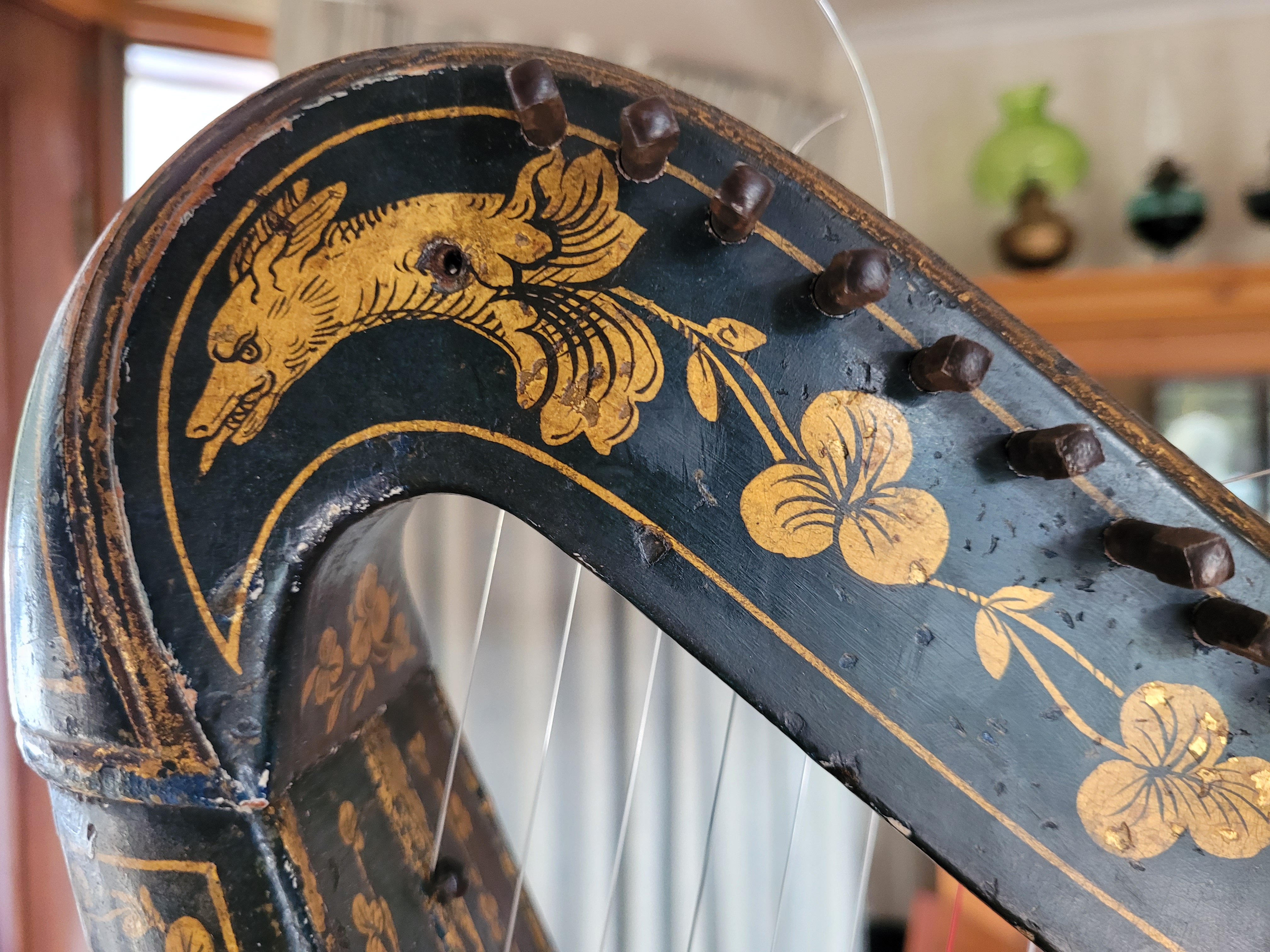
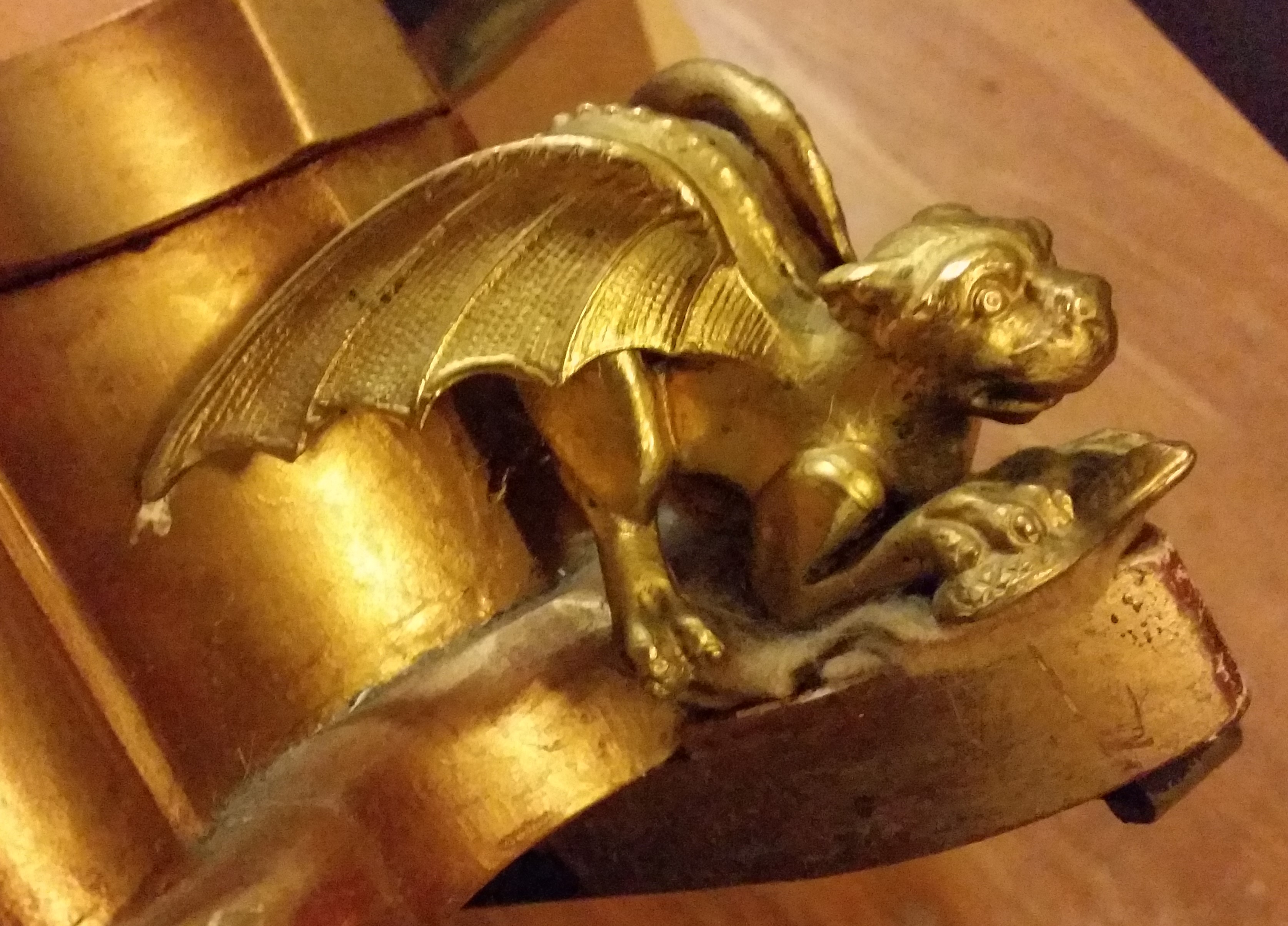
The front pillar and base of a harp is often very decorative and distinctive. This decoration, along with the makers plate, can be used to identify the make and model of harp. As the ornamentation of harps changed over time, they can also be used to date instruments. Initially, the decoration comprised painted wood carving but around 1810 London harp makers shifted to using ‘compo’ relief decorations made using moulds. One recipe for compo from this period gives the ingredients as whiting (finely ground chalk), hide glue and oil (Baldwin 2020:213). Once the compo hardened and was released from the mould, it was attached to the harp and painted gold or gilded. Common compo decorations were inspired by Grecian and Gothic art motifs, and included plants, animals and figures such as acanthus flowers and leaves, caryatids, cherubs, rams heads, lions, floral wreaths or swags and gargoyles.
The following are some example decorative harp pillars and bases.
J.A.Stumpff, single-action pedal harp. London, c. 1811-1847.
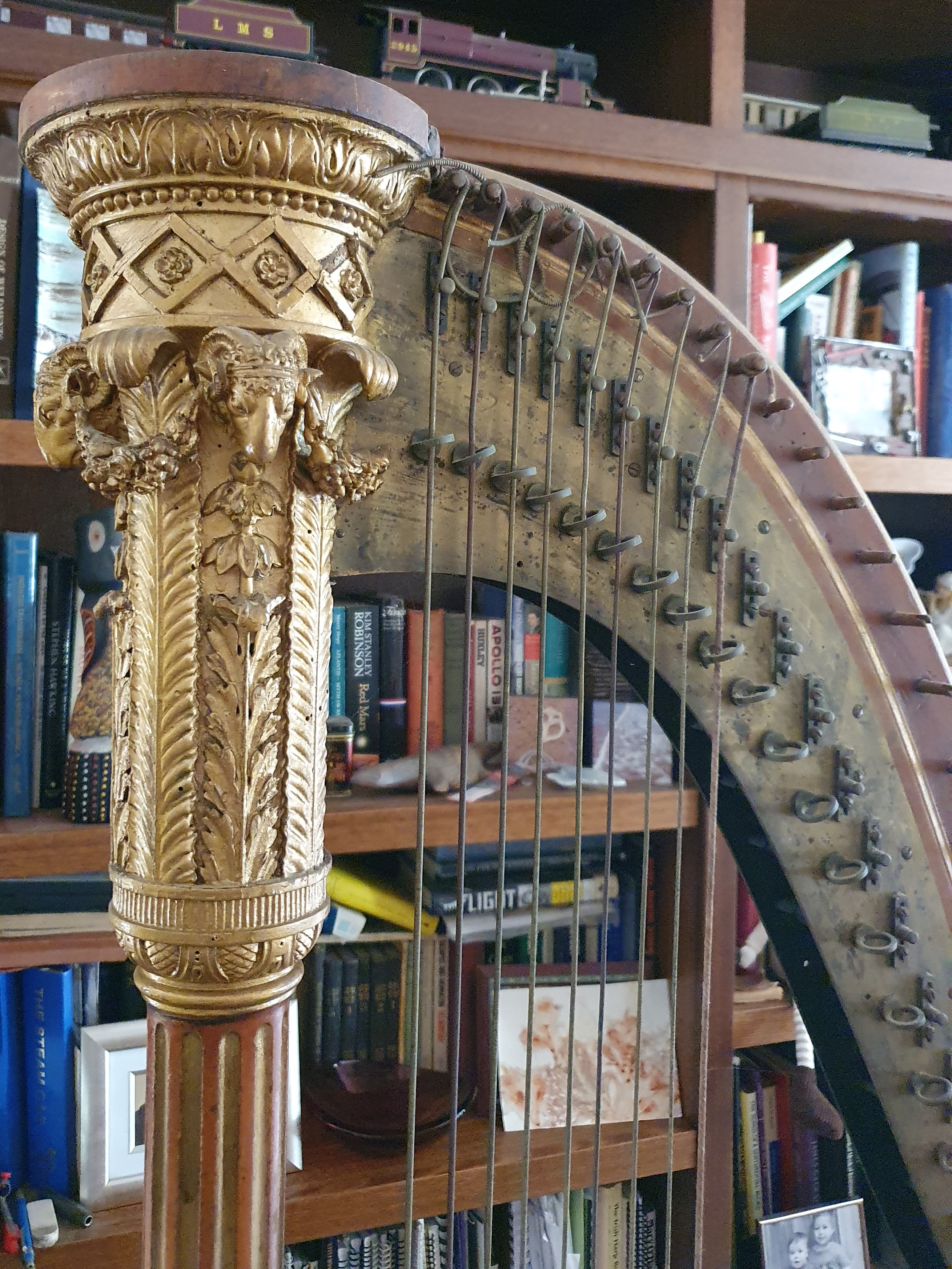
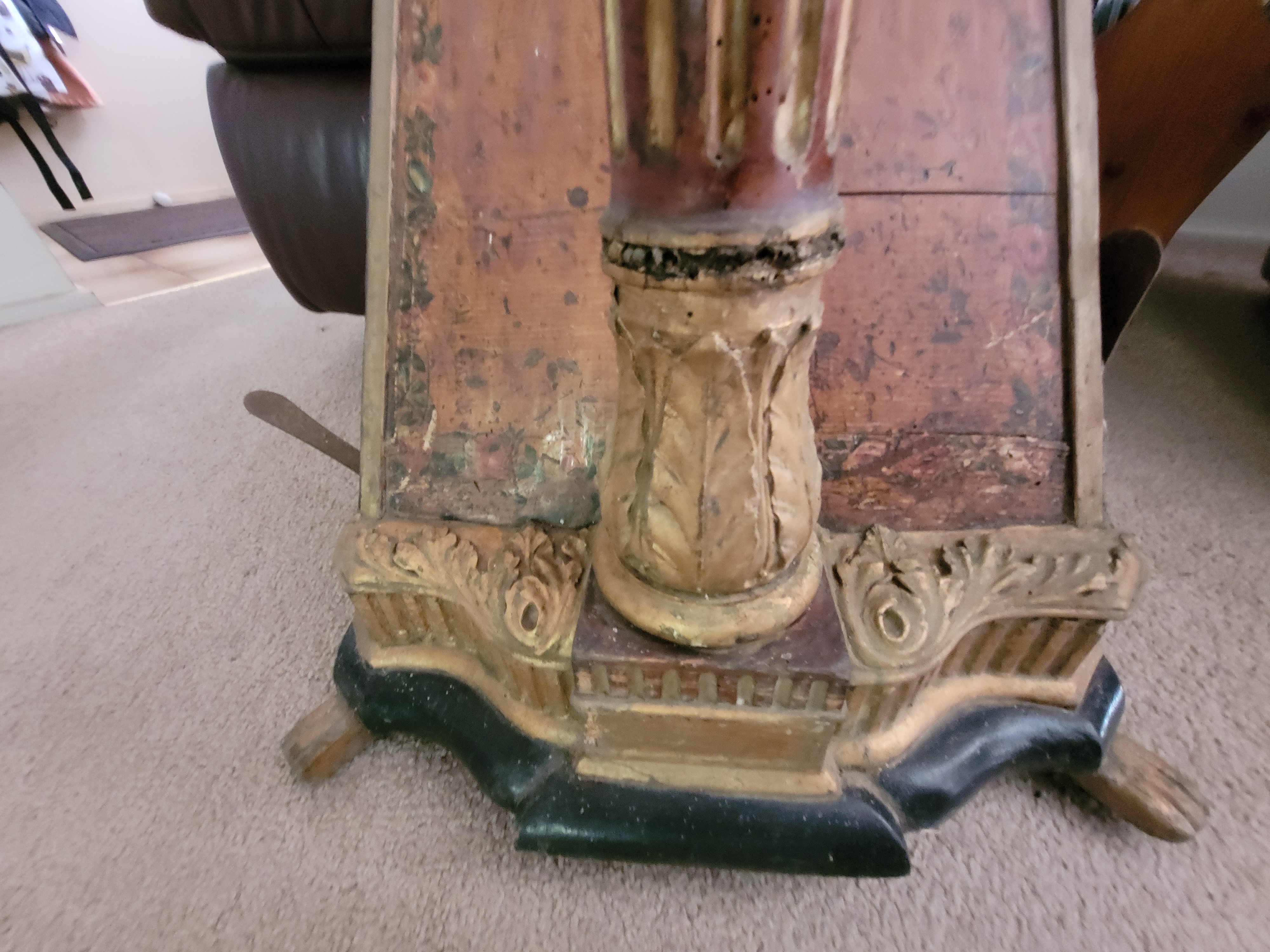
Front pillar shows feathers, rams heads and swags. Pedal box shows leaf decoration.
Sebastien Erard, double-action Grecian pedal harp. London, 1823.
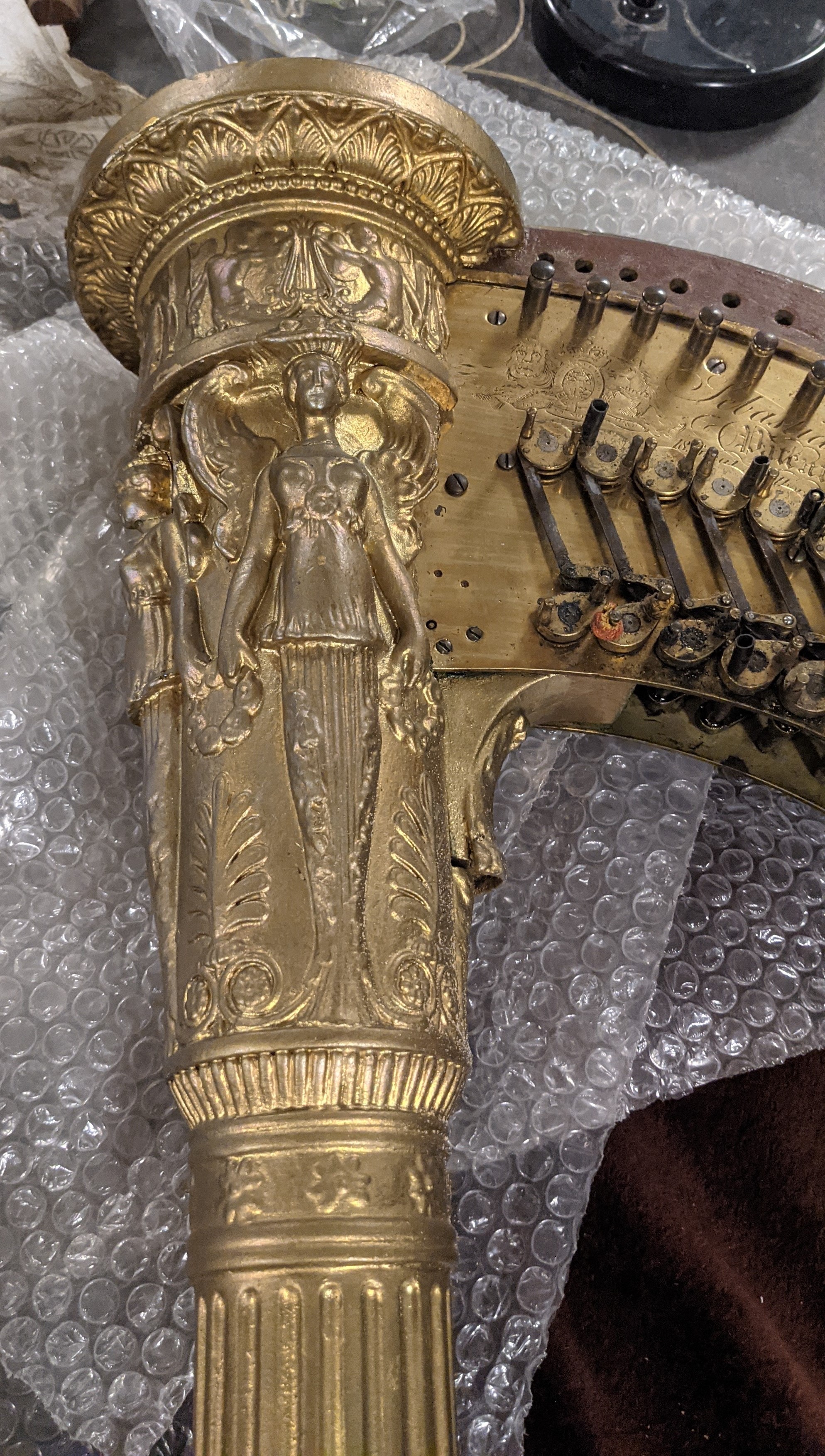
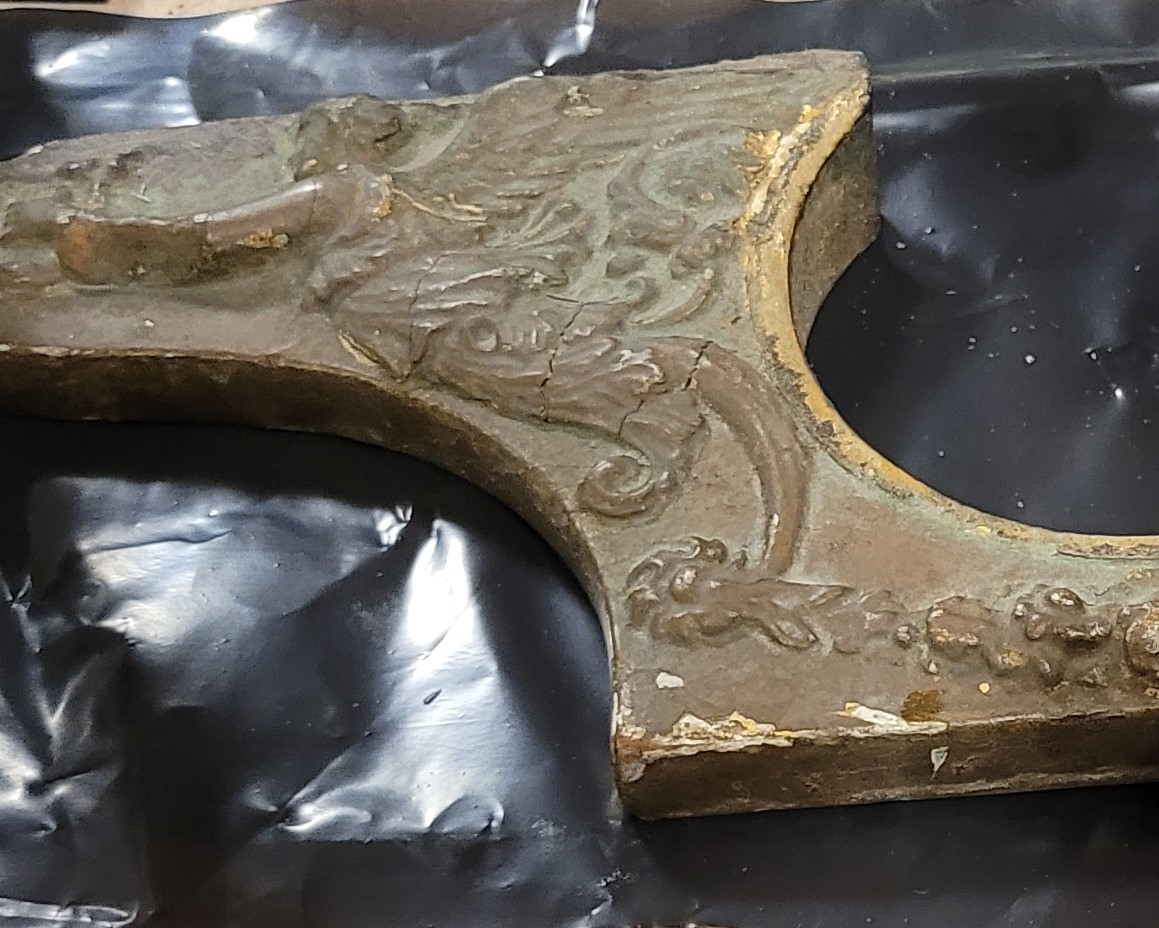
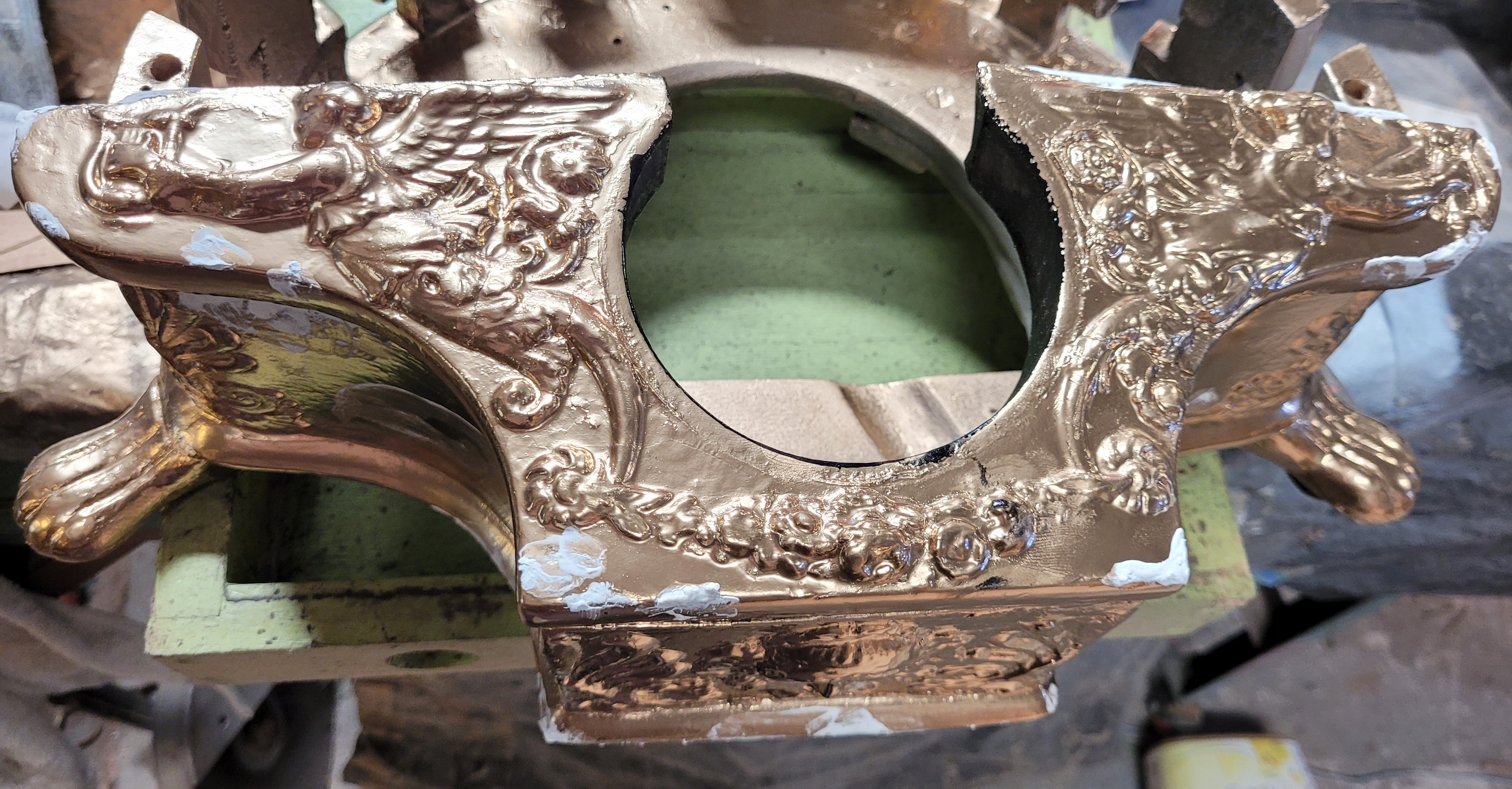
Front pillar shows winged caryatids holding wreaths. Pedal box shows angel with lyre (images are of before and during restoration).


 HISTORICAL HARPS - AUSTRALIA